



Table of Contents
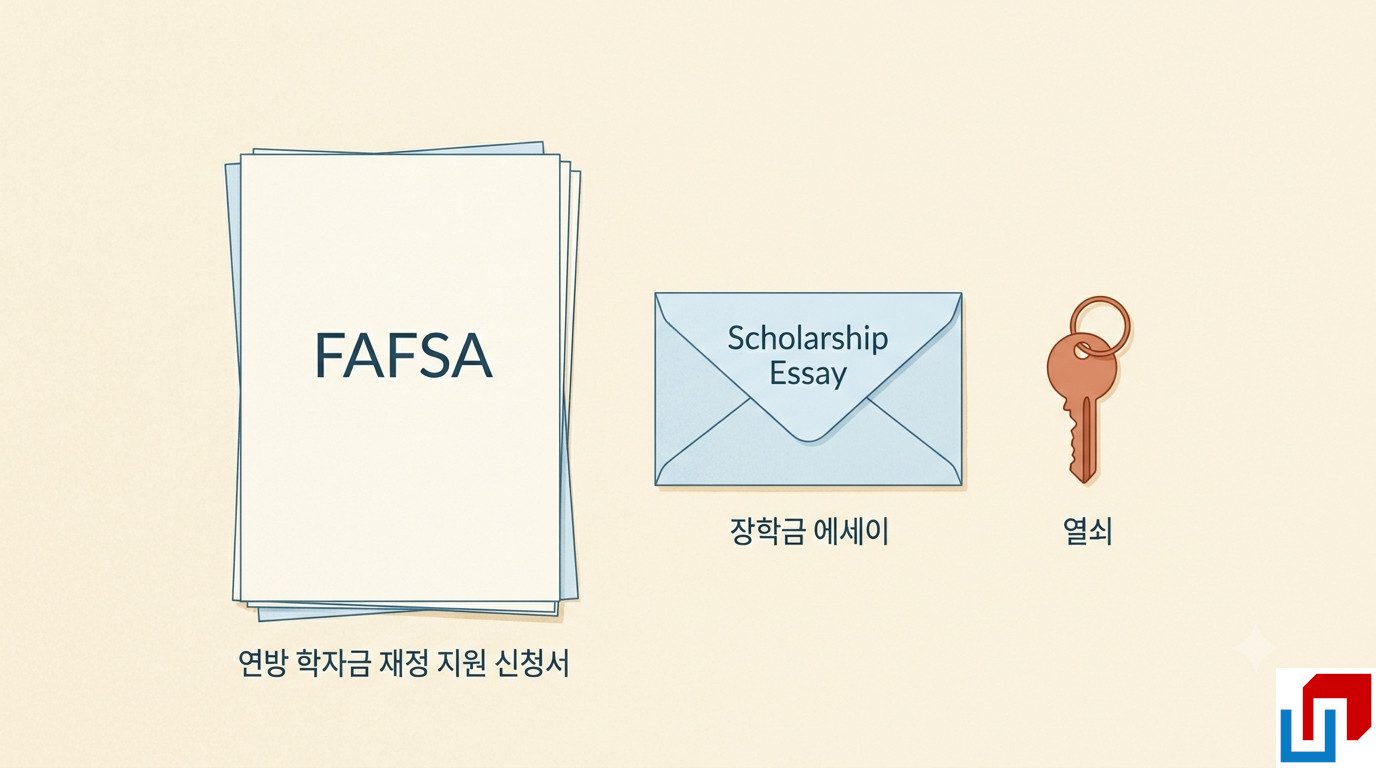
얼마 전에 아이 친구 엄마랑 커피를 마셨어요. 대화가 자연스럽게 대학 얘기로 흘러갔고, 그 엄마가 한숨을 푹 쉬더라고요. “나는 FAFSA가 뭔지도 모르고 처음 냈어. 그냥 학교에서 하라는 대로 했는데, 나중에 보니까 우리 집 자영업 때문에 손해를 엄청 봤더라고.” 우리집은 자영업 걱정을 하지 않지만 그 말 100% 공감해요.
우리 세대 한인들은 특히 이 부분에서 정보 격차를 많이 겪어요. 부모님은 최선을 다해 일하셨는데, 그 재산이 오히려 장학금 계산에서 불리하게 작용하거나, 아이 장학금 에세이 한 편 때문에 수천 달러 차이가 나는 상황이 생기죠. 모르면 손해고 알아야 받을 수 있는 돈이에요. 미국에서 자란 한인으로서 이 시스템을 조금이라도 더 잘 알고 싶어서 오늘 정리해봤어요. 2026년에 달라진 FAFSA 핵심 변경 사항, 한인 학생을 위한 장학금 프로그램, 그리고 실제로 통하는 에세이 전략까지요.
자, 그럼 실제로 어떻게 하는지 살펴볼게요.
What Changed with FAFSA in 2026-27
If you filed FAFSA even two years ago, this year’s form looks noticeably different. And some of those changes are genuinely good news for Korean-American families.
The form opened earlier than ever. The 2026-27 FAFSA launched on September 24, 2025 — the earliest it has ever opened. That matters because financial aid is often first-come, first-served at the school level. If you waited until spring to file, you may have left money on the table. Set a calendar reminder for October 1 every year, and treat it like a bill due date.
Your small business no longer counts against you. This is the biggest change Korean-American families need to know. Under the new rules, the net worth of businesses with 100 or fewer full-time employees is excluded from the Student Aid Index (SAI) calculation. Same for family farms where the family lives. If your parents run a restaurant, a dry cleaning shop, or any small business, that asset no longer hurts your aid eligibility. Many Korean-American families have been losing out on aid for years because of this. Going forward, make sure the FAFSA is filled out correctly under the new rules — and if past filings used the old rules, it’s worth talking to your school’s financial aid office about whether anything can be adjusted.
Pell Grant eligibility has new rules. Starting in 2026, students need to be enrolled at least half-time to qualify for Pell Grants. Students whose SAI is more than double the maximum Pell Grant amount — currently $7,395 for 2025-26 — will no longer qualify. On the positive side, Pell Grants are now expanding to cover short-term vocational and trade programs lasting 8 to 15 weeks, which opens doors for students considering non-traditional paths.
Parent PLUS loans now have a hard cap. Parent PLUS loans are limited to $20,000 per year and $65,000 total per student. Graduate PLUS loans are closed to new borrowers after July 1, 2026. If your family was relying on PLUS loans to fill the gap between financial aid and tuition, this changes your math. The practical takeaway: scholarships and grants matter more than ever, and applying early and widely is no longer optional.
Korean-American Scholarships Worth Knowing
The scholarship landscape for Korean-American students is more robust than most families realize. These programs are specifically designed for students with Korean heritage and are actively funded.
- Korean American Scholarship Foundation (KASF) is the oldest and largest organization serving Korean-American students, founded in 1969. In 2025 alone, KASF awarded $845,500 in scholarships ranging from $500 to $5,000 per student. KASF operates through regional chapters — Western, Eastern, and Midwestern — and each region has its own application window, typically April 1 through June 30 each year. Applications are evaluated on financial need and academic achievement together, and a 4.0 GPA is not required. If you missed the 2026 window, mark April 1, 2027 on your calendar now and visit kasf.org in the fall to confirm the next cycle’s dates.
- Korean Honor Scholarship is available through College Board’s BigFuture platform for students of Korean or Korean-American heritage at both the undergraduate and graduate level. If your student is already using BigFuture for college research, this one is a straightforward addition to the application list.
- Great American Scholarship Foundation (GASF) focuses specifically on students in the Southeast — Alabama, Georgia, North Carolina, South Carolina, and Tennessee. If you’re in that region, check greatamericanscholarship.org for their current cycle.
One pattern worth noting: the same students who apply to multiple Korean-American scholarships in the same cycle, and who use a tailored essay for each one rather than a generic template, win at significantly higher rates. The applications are not long. The essay is where the decision gets made.
Writing a Scholarship Essay That Actually Works
This is where most students leave money on the table. Not because they are not qualified, but because the essay does not do what it needs to do.
- Lead with a story, not a resume summary. Scholarship committees read hundreds of essays that start with “I want to be a doctor because my parents sacrificed so much.” Those are facts, not stories. Start with one specific moment: the night you translated a hospital bill for your parents, the afternoon you realized you were the only Korean kid in the room and how that felt, the conversation you had with your grandparents that changed how you thought about your future. That kind of specificity is what makes a reader stop.
- Match your story to the organization’s values. A Korean-American scholarship is not just looking for academic achievement. They are looking for students who understand what it means to carry two cultures at once. If KASF asks why your heritage matters to your future, don’t submit the same essay you used for a general scholarship. Write the honest one. What being Korean-American has actually cost you, and what it has given you. That version is the one that wins.
- Keep it tight and read it out loud. Most scholarship essays have a word limit of 250 to 500 words. Every sentence needs to earn its place. If a sentence doesn’t add something new — a detail, a feeling, a turn — cut it. Read the essay out loud before you submit. If you stumble over a sentence when reading it aloud, that’s a sentence that needs to be rewritten.
- Build in two weeks and get another set of eyes. Give yourself at least two weeks before the deadline. Write the first draft. Put it away for two days. Read it again. Then ask someone you trust — a teacher, a mentor, a strong writer in your circle — to read it and tell you what they remember after one read. That is your essay’s actual message. If it’s not what you intended, you have time to fix it.
자주 묻는 질문
-
FAFSA를 제출하면 장학금이 자동으로 결정되나요?
FAFSA is the starting point for federal financial aid, but it does not automatically apply to private scholarships. Korean-American scholarships like KASF require completely separate applications with their own essays and deadlines. Filing FAFSA early is essential because many schools use it for their own institutional grants, but for private scholarships you need to research and apply independently.
-
한인 장학금은 GPA가 낮으면 신청이 안 되나요?
KASF scholarships evaluate both financial need and academic achievement, but a 4.0 GPA is not a requirement. Many Korean-American scholarship programs weigh community involvement, family background, and personal essays as heavily as grades. Students with GPAs in the 3.0 to 3.5 range have successfully received KASF awards, and the essay is often the deciding factor.
-
부모님이 소규모 사업체를 운영하시는데 FAFSA에 어떻게 반영되나요?
Under the 2026-27 FAFSA rules, the net worth of businesses with 100 or fewer full-time employees is now excluded from the Student Aid Index calculation. This means a family-owned restaurant, nail salon, or retail shop no longer reduces your financial aid eligibility the way it used to. Make sure the FAFSA is completed correctly to take advantage of this change, and consult your school’s financial aid office if you have questions.
-
장학금 에세이는 얼마나 일찍 시작해야 하나요?
Start at least four to six weeks before the deadline. KASF applications open April 1, so beginning your essay in February or early March gives you time to draft, revise, and get feedback. Rushed essays are easy to spot, and scholarship committees read enough of them to know the difference.
-
여러 한인 장학금에 동시에 지원할 수 있나요?
Yes, and you should. KASF regional chapters are based on where your school is located, so you are typically eligible for one regional chapter. But other Korean-American scholarships like the Korean Honor Scholarship and regional programs like GASF operate independently and can be applied to in the same cycle. Apply to every program you qualify for.
Conclusion
이 복잡한 시스템을 들여다볼 때마다 드는 생각이 있어요. 우리 부모님 세대는 이런 정보 없이, 그냥 열심히 하면 길이 열릴 거라 믿으시며 여기까지 오셨잖아요. 그리고 많은 경우 그게 맞았어요. 근데 막상 내가 엄마가 되니까, 그 방식만으로는 지금 이 시스템을 뚫기가 너무 어렵다는 걸 알게 되더라고요. 정보를 아는 것과 모르는 것의 차이가, 우리 아이들이 어느 학교를 다닐 수 있느냐를 바꿔놓을 수 있거든요. hanurl.com에 이런 이야기들을 계속 쌓아가는 이유가 그거예요.
이 문제가 쉽지 않다는 거, 저도 알아요. FAFSA 앞에서 머리가 아파하신 분들, 장학금 에세이 앞에서 우리 아이가 막막해하는 걸 지켜보신 분들 모두, 그 과정이 얼마나 힘든지 공감해요. 정답은 없지만 서로의 경험을 나누다 보면 조금은 덜 막막해지잖아요. 이게 쉬운 문제가 아니잖아요, 정말로.
여러분은 자녀 장학금 준비를 어떻게 하고 계세요? FAFSA 때 특히 헷갈렸던 부분이 있으셨나요, 아니면 한인 장학금을 실제로 받으신 경험이 있으신가요? 댓글로 나눠주세요. 다음 글에 꼭 반영할게요.
Keeping the Spirit of Korea Alive in the U.S.