




Table of Contents
학교에서 스마트폰을 금지한다는 소식을 처음 들었을 때 (School Smartphone Ban), 솔직히 안도감 같은 게 있었습니다. 학교 스마트폰 금지 효과 2026이 어떻게 나타날지 기대하면서도, 어쨌든 ‘이제야’라는 생각이 먼저 들었으니까요. 아이가 수업 중에 폰을 몰래 보고, 점심 시간엔 친구 얼굴 대신 화면을 보고, 집에 돌아와서도 폰에서 눈을 못 떼는 걸 보면서, 많은 부모들이 비슷한 생각을 했을 겁니다. 학교라도 나서서 경계를 만들어줘야 한다고요.
그런데 2026년 가을, 전국 단위로 진행된 연구 결과가 발표되었습니다. 42개 주와 워싱턴 D.C., 푸에르토리코가 스마트폰 관련 법을 통과시키고, 그 중 26개 주는 하루 종일 폰을 잠금 파우치에 넣는 전일제 금지를 시행한 지 1년이 지난 시점의 데이터였습니다. 결과는 많은 부모들이 기대했던 것과 달랐고, 그래서 오히려 더 솔직하게 들여다볼 필요가 있었습니다.
What the 2026 Research Actually Found About School Smartphone Bans
The numbers are real, and they matter. A nationwide study released in 2026 looked at schools that had implemented lockable pouches for phones across the 42-state wave of legislation, and the results were striking in their modesty. For most schools, especially at the elementary and middle school levels, standardized test scores showed almost no measurable change after the phone ban went into effect in year one.
High schools fared slightly better. The data showed modest positive effects for older students, which researchers suggested might be because the distraction cost of phones is higher for students managing more complex coursework and longer attention-demand tasks. Florida, which has had its ban in place longer than most states, started showing gradual improvements in year two of its program. That is a hopeful data point, but it is also a reminder that these things take time to surface in measurable ways.
The key takeaway is not that phone bans do not work. It is more nuanced than that. The research suggests that simply removing a phone is not the same as creating better learning conditions. A school that takes the phone away and then does nothing differently with the reclaimed time may see little change in the outcomes that get measured. The schools that pair restrictions with intentional adjustments to how that freed time is structured seem to do meaningfully better over time.
What the Data Does Not Capture
Test scores are not the whole story, and anyone who has spent time talking with teachers in the last few years knows that. Many educators reported that something shifted in their classrooms when phones were locked away from the start of the day. Discussions became more engaged. Students who had been passive or distracted participants started contributing more to class conversation. The cafeteria at lunch felt different, not entirely, but in ways that teachers and counselors consistently noticed.
Counselors in several districts reported decreases in in-school cyberbullying incidents after the first semester of full-day bans. This does not show up in a standardized test, but it is real and it matters. A student who is not being harassed through group chats during third period is in a better position to learn, to be present, and to build the kind of social trust that makes school a place worth being.
There is also something important about what it means to create a shared boundary across an entire school community. When a whole building agrees together that phones are tools and not constant companions, it is different from a parent trying to enforce limits at home while the school treats phone use as a non-issue. The collective agreement normalizes a different relationship with technology, and that shift in culture may take two or three years to show up clearly in academic data. The research we have now is year one. It is not the final word.
The Real Questions to Ask Your School District
Here is where the most useful work happens for parents right now. The question is no longer whether your school has done something about phones. Almost every school in your state has some kind of policy in place. The more useful question is about what comes next, and whether the school has thought carefully about it.
Ask your school whether they are using a full-day lockup from first bell to last, a class-period-only ban, or a voluntary guidance policy. The specifics matter significantly. A school where phones are locked away during classes but freely used at lunch and in the hallways is a very different environment from one where phones are stored away for the entire school day. Both may technically comply with state law, but they produce different experiences and different results for students.
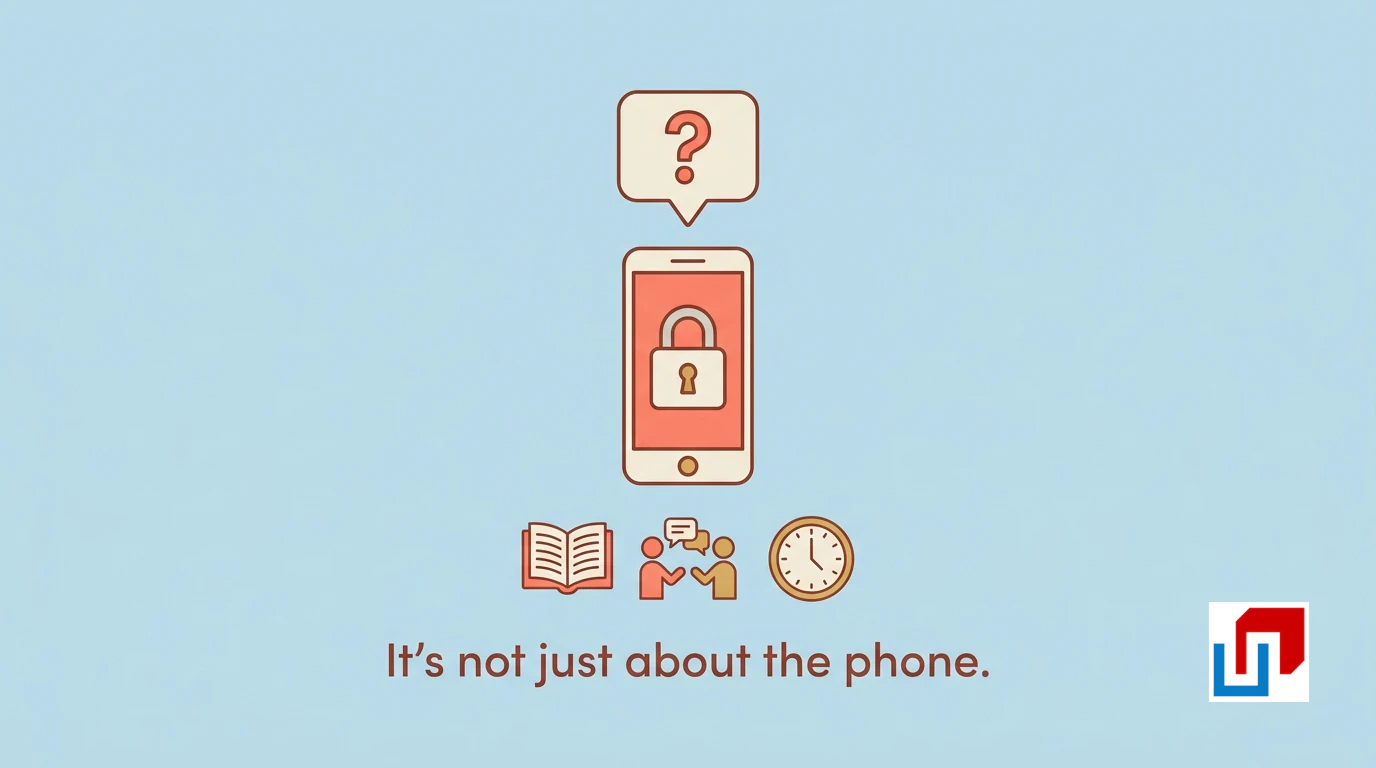
Ask what the school has added to the day, not just what it removed. Research consistently shows that the schools seeing the best early results are the ones that planned intentionally for the reclaimed time. Some added structured independent reading periods. Others redesigned homeroom and advisory time to include face-to-face social activities. Some expanded library access or launched peer mentoring programs. The phone ban created space. What the school chose to put in that space is what makes the difference between a symbolic policy and a meaningful one.
Ask how the school handles exceptions, because real situations will require them. Students managing chronic health conditions, students with anxiety or sensory needs who rely on certain kinds of support, students in complex family circumstances where reliable communication matters. A well-designed policy has a clear, transparent, and humane process for these situations. If your school administrator cannot answer this question, that is worth noting and worth following up on.
And one more question, perhaps the most practical of all: How will the school communicate with parents when something unexpected happens? If your child has an accident, gets into a conflict with another student, or needs to leave early, what is the protocol now that phones are stored away? A school that has thought through this communication process and shared it clearly with families at the start of the year is one that took the transition seriously. That is a school worth trusting with the harder work of building a better learning environment.
학교 스마트폰 금지 효과 2026: 자주 묻는 질문
Q. 성적 변화가 거의 없었다면 스마트폰 금지가 효과 없는 건가요? A. 꼭 그렇지는 않습니다. 2026년 전국 연구는 단기 성적 변화를 측정한 것이고, 교실 분위기 개선, 사이버 괴롭힘 감소, 학생 간 대면 소통 증가 같은 변화들은 수치로 포착되지 않았습니다. 플로리다처럼 2년 이상 운영한 학교들에서는 성적에서도 서서히 긍정적인 추세가 나타나고 있습니다. 장기적인 결과를 지켜볼 필요가 있습니다.
Q. 모든 주가 같은 방식으로 금지하나요? A. 아닙니다. 42개 주가 관련 법을 통과시켰지만, 시행 방식은 각기 다릅니다. 26개 주는 하루 종일 잠금 파우치를 사용하는 전일제 금지를 선택했고, 나머지는 수업 시간 중에만 제한하거나 자율 정책을 운영합니다. 아이 학교가 구체적으로 어떤 방식을 쓰는지 직접 확인하는 것이 중요합니다.
Q. 응급 상황에서 아이와 연락이 안 되면 어떻게 하죠? A. 잘 설계된 스마트폰 금지 정책에는 긴급 상황 프로토콜이 포함됩니다. 대부분의 학교는 교무실 전화를 통한 학부모 연락 채널을 유지하고 있으며, 의료적 필요가 있는 학생에게는 개별 예외를 적용합니다. 입학 초기에 학교의 긴급 연락 절차와 예외 정책을 구체적으로 확인해두는 것을 권합니다.
Q. 스마트폰 금지가 아이의 불안감을 높이지 않을까요? A. 처음 적응 기간 동안 일부 아이들이 불편함을 느낄 수 있습니다. 특히 부모님과 자주 연락을 주고받던 습관이 있거나 사회적 불안 경향이 있는 경우 더 그럴 수 있습니다. 연구에서는 적응 기간이 지나면 대부분의 학생이 교실 분위기 자체가 더 편안해졌다고 보고합니다. 걱정이 되면 담임 선생님이나 스쿨 카운슬러와 미리 이야기하는 것이 좋습니다.
Q. 학부모 미팅에서 스마트폰 정책에 대해 어떻게 물어보면 좋을까요? A. “폰을 금지하셨나요?”보다 구체적인 질문들이 더 유용합니다. “전일제 금지인가요, 수업 시간만 금지인가요?”, “금지 이후 그 시간을 어떻게 활용하고 계신가요?”, “예외 정책과 긴급 연락 절차는 어떻게 되나요?”, “1년 후 어떤 변화를 기대하고 그것을 어떻게 측정할 계획인가요?” 이런 질문들이 학교가 단순히 법을 따르는지, 아니면 아이들을 위해 실질적으로 설계된 정책을 운영하는지 구분하는 데 도움이 됩니다.
스마트폰 금지법이 42개 주에서 통과되었다는 것 자체는 의미 있는 변화입니다. 학교가 아이들을 위해 경계를 만들겠다고 결정했고, 그 결정에는 용기가 필요했습니다. 부모로서 그 방향을 지지할 수 있습니다.
다만 그 결과가 즉각적이지 않을 수 있다는 것, 그리고 금지 그 자체만으로는 충분하지 않을 수 있다는 것, 이 두 가지를 이해하고 있어야 더 나은 부모가 될 수 있습니다. “폰 뺏었나요?”가 아니라 “그 다음엔 무엇을 했나요?”를 물을 수 있는 부모가, 아이 학교를 조금 더 나은 방향으로 함께 만들어가는 부모입니다.
Keeping the Spirit of Korea Alive in the U.S.